
 Available in US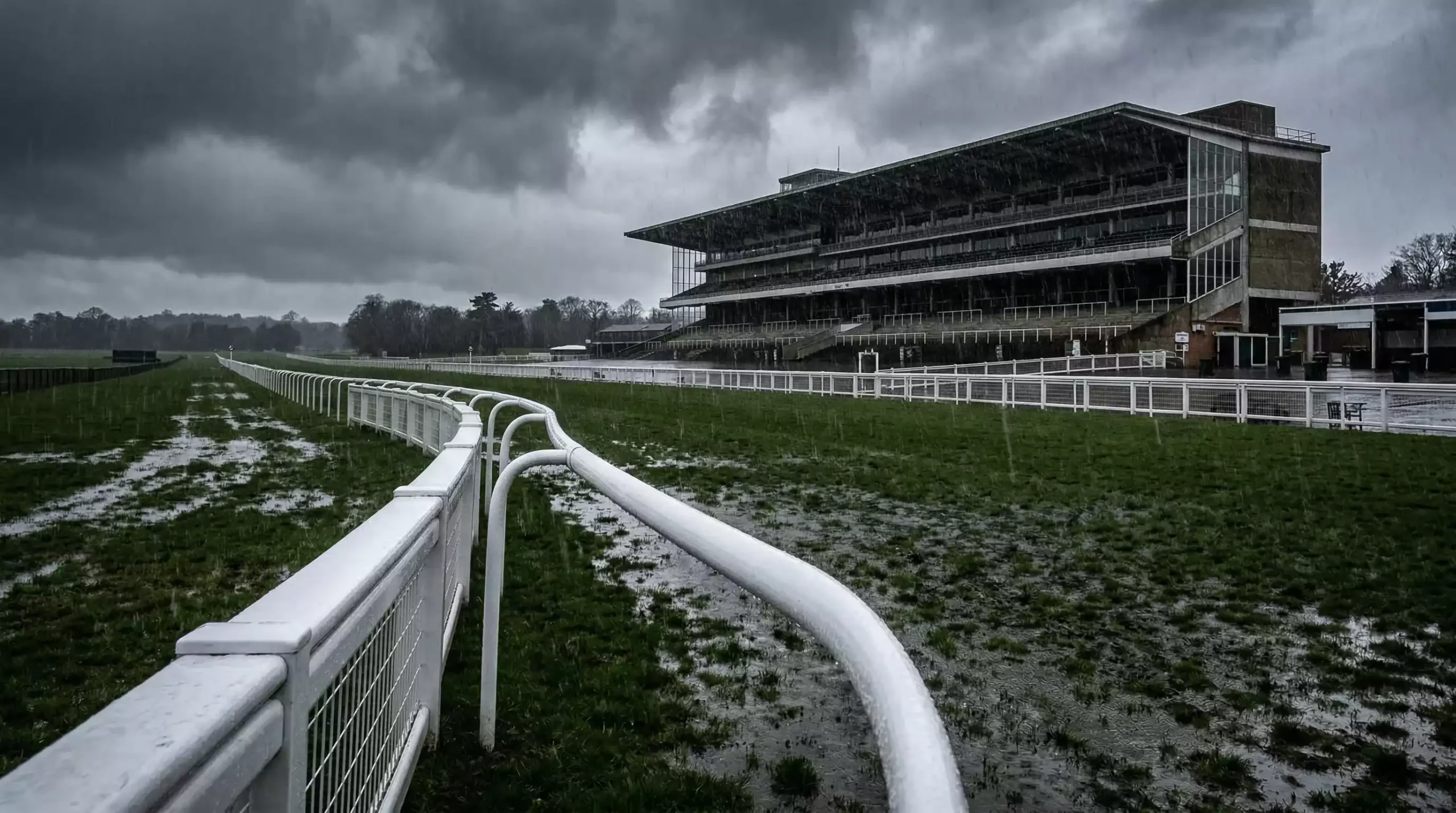
Weather drives going, going drives non-runners, and a frost inspection at 7am can wipe out an entire day’s card. The chain is short, direct, and powerful enough to reshape any afternoon of British racing. A punter who studies form, checks the draw and analyses pace but ignores the weather forecast is building a plan on foundations that might shift overnight. How Weather Affects Horse Racing — More on this topic at non runners tomorrow.
Check the sky before you check the card. This article breaks down how rain, frost, wind and heat affect racecourse conditions, how those conditions lead to withdrawals and abandonments, and where to find the forecasting tools that help you stay ahead of the changes.
Rain — How Precipitation Changes the Going
Rain is the most frequent and most impactful weather factor in British racing. Even moderate overnight rainfall can shift the going by one full category — from good to firm down to good, or from good to soft down to soft. Sustained heavy rain over 24 hours can push a course from good all the way to heavy, transforming the nature of the racing surface entirely.
The effect is not uniform. Courses with modern drainage systems — Ascot, for example, which was rebuilt with extensive subsoil drainage in 2006 — can absorb significant rainfall without the going deteriorating as fast as on older tracks with clay-heavy soil and limited drainage. A course like Pontefract, which sits on heavy ground naturally, can turn soft after relatively modest rain, while Newmarket’s well-drained heath might take twice the rainfall to reach the same state.
The connection to non-runners is immediate. When the BHA reviewed early 2024 conditions in its November 2024 Racing Report, the numbers were stark: nearly four in five Jump fixtures during January and February ran on soft or heavy ground, well above the three-year average of 48 per cent. Weeks of persistent rain made it impossible for trainers with ground-sensitive horses to find suitable conditions, and withdrawal rates climbed as a direct result. When rain persists across several weeks, the cumulative effect on non-runner volumes is substantial — more soft ground means fewer suitable runners per race, and fields shrink accordingly.
For punters, the practical lesson is to check rainfall totals at the specific course, not just the regional forecast. The Met Office and specialist services such as racing-focused weather pages on Timeform publish course-level forecasts that are far more useful than a generic national outlook.
Frost, Freezing and Meeting Abandonments
Frost is the weather condition most likely to cancel racing entirely. When temperatures drop below zero overnight and the ground freezes, turf becomes dangerously hard — far harder than “firm” on the standard going scale. A horse galloping at speed on frozen ground risks catastrophic leg injuries, and no clerk of the course will allow racing on a surface where the going stick cannot even penetrate the top layer.
The typical response is a frost inspection. The clerk arrives at the course at first light — usually around 7am — and tests the ground. If the surface has thawed sufficiently, racing goes ahead. If the frost is too deep or persistent, the meeting is abandoned. Abandonments can also be called the evening before if the forecast is severe enough, but more often the decision is left until the morning inspection, because conditions can change quickly at marginal temperatures.
Frost hits Jump racing hardest, since the National Hunt season runs through the winter months when sub-zero nights are common. A January card at a northern course like Catterick or Wetherby is always vulnerable to a frost inspection. Southern tracks are not immune either — sharp overnight frosts in November and March can catch courses off guard, particularly exposed tracks with little tree cover to insulate the ground.
From a betting perspective, frost risk introduces a binary outcome: the meeting either happens or it does not. If you have placed bets on a meeting that is abandoned, those bets are void and stakes returned. The frustration is logistical rather than financial — your money comes back, but your Saturday afternoon is empty. Checking overnight temperatures at the course location and monitoring the clerk’s social media or Racing Post updates is the best way to stay ahead of abandonment calls. Some courses use frost covers — insulating sheets laid over key sections of the track — to protect the ground during cold snaps, and whether covers are in place is often mentioned in the clerk’s overnight report. Tracks that invest in covers are less likely to lose meetings to marginal frosts, which is worth knowing if you are weighing up whether an early-morning inspection will pass or fail.
Wind, Heat and Summer Firm Going
Rain and frost dominate the conversation, but wind and heat play their own roles. Strong wind dries the ground faster than still air, and in spring and early summer a sustained easterly wind across a flat course like Newmarket can push the going from good to good to firm within a day. That speed of change catches trainers out — a horse declared for good ground may face much firmer conditions 48 hours later.
Summer heat brings its own version of the problem. Extended dry spells harden the ground beyond what many trainers are comfortable with, particularly for horses with joint issues or those bred for softer surfaces. Clerks of the course use watering systems to manage the going during dry weather, but watering has limits — it can soften the top inch or two without addressing the underlying firmness, and it cannot replicate the consistency that natural rainfall provides.
Ground conditions drive approximately 35 per cent of all non-runners in BHA data, and that figure includes summer firm-ground withdrawals as well as winter soft-ground scratches. The seasonal pattern shifts — winter produces going-related non-runners because the ground is too soft; summer produces them because the ground is too firm — but the underlying mechanism is the same. The going moves, and horses that do not suit it are pulled.
Weather Forecasting Tools for Racing Fans
The Met Office remains the most reliable general source for UK weather data. Its site and app provide hourly forecasts by location, which means you can check the expected rainfall at a specific racecourse rather than relying on a regional summary. For course-level precision, the Racing Post and Timeform both publish going forecasts that factor in not just weather but also the course’s drainage characteristics and any planned watering.
Some punters use the Weather Underground app or Windy for more granular data, including rainfall radar overlays that show exactly when and where precipitation is arriving. These tools are particularly useful in the hours before racing, when a rain band approaching from the west might miss one course but hit another thirty miles away. The difference between “rain expected in the region” and “rain arriving at Cheltenham at 1pm” is the difference between a vague concern and an actionable forecast. See also Ante-Post Betting Rules.
The clerk of the course is the final authority. Most clerks now post updates on social media — particularly on X (formerly Twitter) — with going changes, watering schedules and inspection times. Following the clerk’s account for courses where you frequently bet is one of the simplest and most effective weather-monitoring habits you can build. The information is free, it is first-hand, and it often arrives before the mainstream racing media pick it up.
