
 Available in US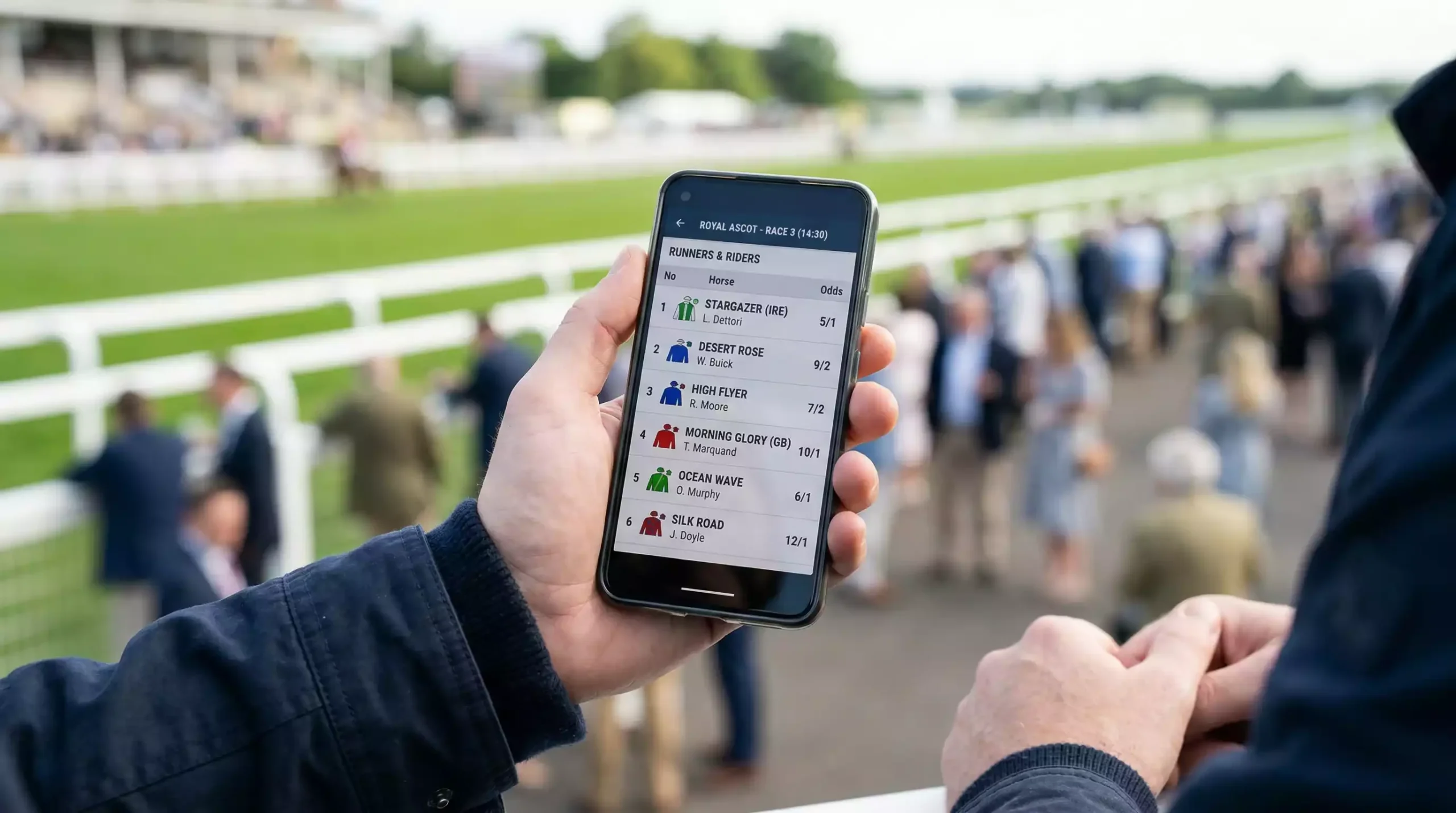
Non-runners can be declared right up to 90 minutes before the first race — and in rare cases, even later if a horse is pulled at the start under Rule (H)6. The window between a withdrawal being confirmed and the market adjusting is narrow, which means the speed and reliability of your information source matters. Use the right tool and you see the non-runner before the bookmaker reprices. Use the wrong one and you find out from a voided bet slip. How to Check Non Runners Before Racing — More on this topic at non runners tomorrow.
The right source at the right time saves money. This article ranks the main platforms for checking non-runners in UK racing, from official BHA feeds through to mobile apps with push notifications, and maps out a practical morning-of-race workflow that keeps you ahead of the changes.
BHA and Official Data Feeds
The British Horseracing Authority is the upstream source for all non-runner data in UK racing. When a trainer submits a withdrawal — whether by self-certificate, vet certificate or going request — BHA Racing Administration processes it and updates the official record. Every downstream platform, from the Racing Post to your bookmaker’s app, pulls its data from this feed. If two sources disagree, the BHA record is the one to trust.
The BHA publishes confirmed runners and non-runners through its Racing Admin portal. The interface is functional rather than elegant — it is built for racing professionals, not casual punters — but it is the fastest official source. The BHA also publishes quarterly reports tracking non-runner rates by trainer, by code and by season. According to the Q3 2025 Racing Report, non-runner rates across British racing are at their lowest level since 2022, a trend driven by stricter threshold enforcement and the deterrent effect of the monitoring programme.
The official data feeds also carry information about Rule (H)6 declarations — stewards’ non-runners at the start. As Brant Dunshea, BHA’s Chief Regulatory Officer, noted in 2025, the rule “has been well received” since its introduction in May 2024, and its extension to Jump races from October 2025 means that stewards’ non-runners now appear in the feed for all codes. These are the rarest type of non-runner — the rule has been invoked roughly half a dozen times in its first year — but when they occur, the BHA feed is where the data originates.
Racing Post, Timeform, Sporting Life and At The Races
The Racing Post is the default source for most punters in the UK. Its race card pages display every declared runner with draw, weight, jockey and trainer, and non-runners are marked with a red “NR” tag, a timestamp, and usually a reason code — going, self-certificate, vet certificate or other. The depth of contextual information surrounding each non-runner — including form data, going preferences and stable news — makes the Racing Post the most useful single platform for understanding why a horse was withdrawn and what it means for the remaining field.
Timeform provides similar coverage with an analytical overlay. Its speed ratings, going analysis and sectional data allow you to assess the impact of a non-runner on the race’s pace and draw dynamics. Timeform’s race previews are updated after non-runners, which means you get a revised assessment rather than one based on the pre-withdrawal field. For serious form students, this is the most valuable feature — a revised preview that accounts for the changed conditions.
Sporting Life offers a free race card with non-runner updates and is accessible without a subscription. Its coverage is lighter on analytical depth than the Racing Post or Timeform but covers the essentials — declared runners, non-runners, going reports and basic form. At The Races (attheraces.com) fills a similar niche, with the added benefit of live video streaming from selected meetings, meaning you can watch the paddock in real time and spot any late issues before the official non-runner is declared.
Each platform has a slightly different update cadence. The Racing Post and Timeform tend to be the fastest to reflect non-runners after the BHA processes them. Sporting Life and At The Races follow within minutes. The gap is small — rarely more than five minutes — but on a busy morning with multiple withdrawals across several meetings, those minutes can matter.
Mobile Apps and Push Notifications for NR
The Racing Post app is the most widely used mobile tool for NR alerts. You can bookmark specific races or horses, and the app sends a push notification when a non-runner is confirmed in any bookmarked race. The notification arrives within minutes of the BHA processing the withdrawal, which puts you ahead of most bookmaker apps and well ahead of anyone relying on periodic checks of a website.
Timeform’s app provides similar functionality with the addition of pace map updates after non-runners. Bookmaker apps — Bet365, William Hill, Paddy Power and the rest — also flag non-runners, but their updates tend to lag slightly behind the specialist racing platforms because the bookmaker’s system must reprice the market before displaying the change. That repricing delay is where informed punters find their edge: if you know a horse is a non-runner before the bookmaker has adjusted the remaining prices, the current odds on the surviving runners may temporarily represent value.
The BHA is also improving race-start punctuality, which indirectly benefits punters who rely on tight timing. By Q1 2025, 87.6 per cent of races were starting within two minutes of the scheduled off time, up from 72.7 per cent in 2023. Better punctuality means less dead time between the final non-runner check and the off, reducing the risk that a last-second withdrawal catches you unaware.
A Morning-of-Race NR Checking Workflow
A reliable workflow for raceday mornings takes five minutes and can be repeated through the day. Start by checking the declarations list on the Racing Post or Timeform when you wake up — this confirms the overnight field and flags any early-morning non-runners that came through before you checked. Cross-reference with the going report: if the going has changed since declarations closed, mark any horses in your bets whose form suggests they may be unsuited to the new conditions.
Around 90 minutes before the first race, check again. This is the window where most late non-runners are confirmed — after morning exercise, after the trainer’s final assessment, after the vet has inspected any doubtful horses. If a non-runner appears in a race where you have a bet, assess the impact: does it improve your horse’s chance, trigger a Rule 4 deduction, or change the each-way terms? See also Non Runner Effect on Each-Way Betting.
The final check is fifteen minutes before each race. By this point, the field is virtually locked, and any remaining non-runners are exceptional cases — stall incidents handled under Rule (H)6, or genuinely last-minute veterinary withdrawals. If nothing has changed since your previous check, you can watch the race with confidence that your analysis matches the actual field going to post. Three checks, five minutes total, and you are operating with the same information the market-makers use.
