
 Available in US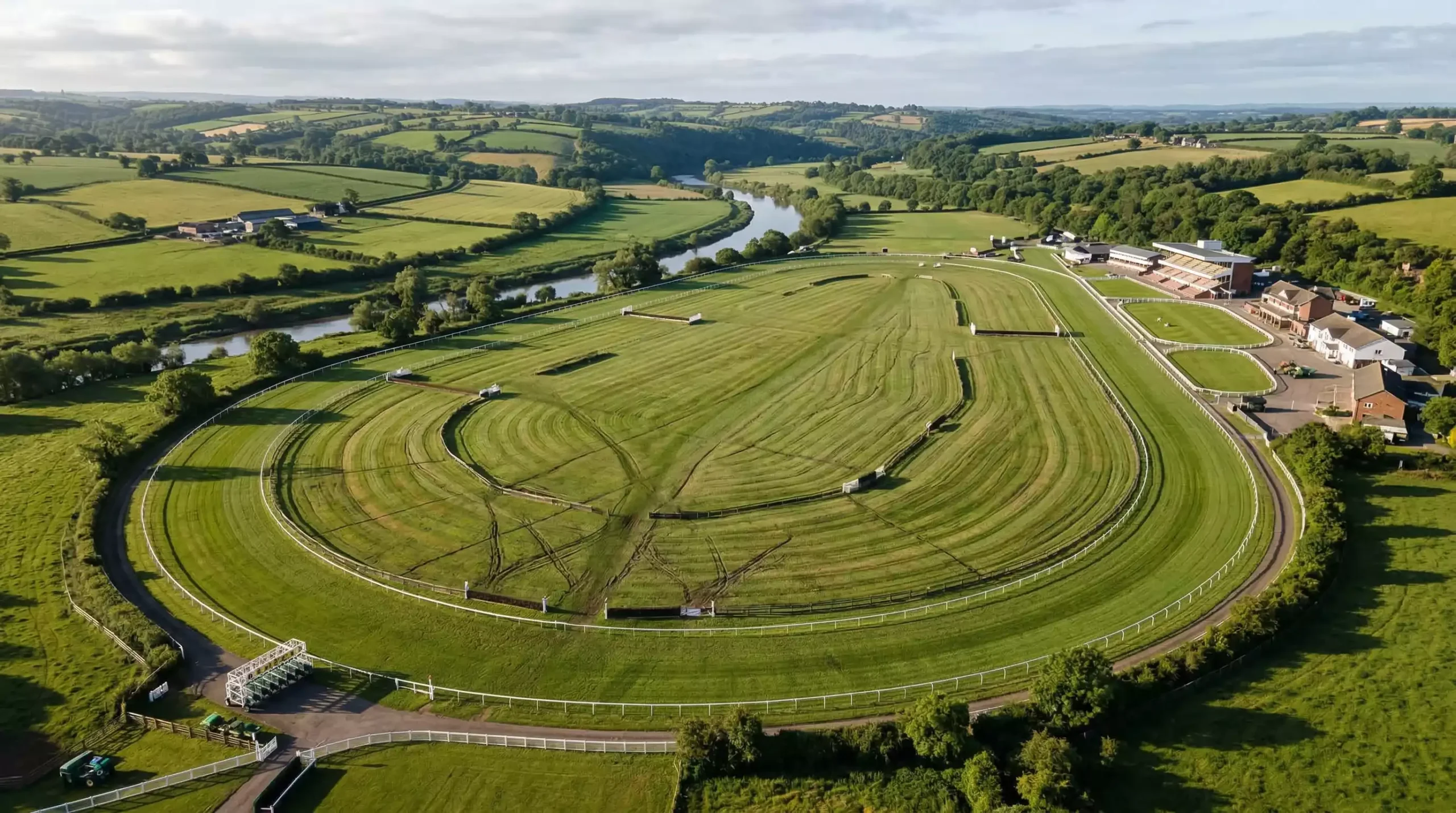
Knowing how a course drains, how quickly its going changes after rain, and what seasonal conditions are typical lets you anticipate non-runners before the official announcements. Two courses thirty miles apart can produce entirely different going on the same day after the same rainfall, because their soil, drainage infrastructure and topography handle water in different ways. A punter who understands those differences has a structural advantage — not just in predicting going changes, but in gauging which horses are likely to be pulled and which fields are most vulnerable to shrinkage. UK Racecourse Going Guide — More on this topic at non runners tomorrow.
Every course has its own relationship with rain. This article covers the main types of drainage system used at UK courses, profiles several key tracks, maps seasonal going patterns by region, and explains how all-weather surfaces provide a different dynamic entirely.
Drainage Systems and Why They Differ
UK racecourses sit on a wide range of soil types — from free-draining chalk and sand to heavy clay that holds water for days. Courses built on chalk downland, such as Goodwood or parts of Epsom, drain naturally and can recover from moderate rainfall within hours. Courses on clay-heavy soil, such as Pontefract or Catterick, absorb water slowly and can remain soft for days after a storm. The underlying geology is the single biggest determinant of how a course rides, and no amount of modern drainage can fully override it.
Modern drainage infrastructure — pipe drainage, gravel channels, and subsoil cultivation — can improve a course’s resilience. Ascot’s 2004–2006 redevelopment included extensive drainage works that transformed the course’s ability to handle rainfall. Courses that have invested in drainage typically recover faster and produce more consistent going, which in turn reduces the number of going-related non-runners. Ground conditions account for approximately 35 per cent of all non-runners in BHA data, and much of that percentage is concentrated at courses with poor natural drainage where the going shifts sharply after rain.
The knowledge gap between the racing industry and the public is something that even leading figures in the sport have highlighted. John Gosden, one of Britain’s most respected trainers, has noted the broader “lack of understanding of the relationship between horseracing and gambling” — a comment aimed primarily at regulators, but equally applicable to the many punters who study form and odds without ever considering the ground the horse will actually run on. Understanding drainage is a practical extension of form study, and courses make the information available through clerk reports, going stick readings and pre-meeting announcements.
Key Course Profiles — Cheltenham, Ascot, Newmarket, York and Beyond
Cheltenham sits in a natural bowl in the Cotswolds, and the lower sections of both the Old Course and New Course can become waterlogged after sustained rain. The course drains adequately in moderate conditions, but the amphitheatre topography channels water downhill, and the January-to-March period — the run-in to the Festival — is when the ground is most vulnerable. The BHA’s November 2024 report noted that in early 2024, 78 per cent of Jump fixtures were staged on soft or heavy ground, well above the three-year average. Cheltenham was firmly in that category, and the resulting non-runner rates at the Festival reflected it.
Ascot is one of the best-drained courses in Britain thanks to the 2006 reconstruction. It handles summer rainfall well and can stage racing on good ground even after moderate overnight showers. The challenge at Ascot is the opposite: in dry June weather, the ground can become too firm despite watering, triggering non-runners from trainers with soft-ground horses. Ascot’s clerk of the course is among the most active on social media, providing regular watering updates and going stick readings that are invaluable for punters monitoring going ahead of the Royal Meeting.
Newmarket races on two courses — the Rowley Mile and the July Course — across the expansive Newmarket Heath. The heathland soil is sandy and drains freely, meaning Newmarket rarely races on truly heavy ground. The flip side is that it can dry out quickly in spring and summer, producing firm conditions that worry trainers of larger, heavier horses. Non-runners at Newmarket are more likely to be going-related in summer (too firm) than in winter.
York sits on low-lying ground near the River Ouse and can be affected by flooding in extreme weather, though modern drainage has reduced the risk significantly. The Knavesmire drains reasonably well in normal conditions, but persistent autumn rain can push the going to soft or heavy — particularly in October when the track is transitioning from the Flat season. York’s Ebor meeting in August occasionally faces the opposite issue: dry weather hardening the ground.
Smaller courses vary widely. Lingfield and Kempton have dual-purpose tracks with turf and all-weather surfaces, offering a wet-weather alternative. Pontefract and Catterick are among the courses most affected by rainfall due to heavy clay soil. Brighton and Epsom, perched on chalk downs, drain fast but can become dangerously firm in heatwaves.
Seasonal Going Patterns by Region
Northern courses — Catterick, Wetherby, Haydock, Musselburgh — experience the harshest winters and the most volatile going. Frost is a significant risk from November through March, and prolonged wet periods can keep the ground soft or heavy for weeks. Non-runner rates at northern courses tend to peak in mid-winter, driven by both going changes and meeting abandonments from frozen ground.
Southern and Midlands courses benefit from milder temperatures and earlier springs. Sandown, Kempton and Newbury can stage racing through the winter with fewer frost disruptions, though heavy rain still drives going changes. The spring transition from Jump to Flat season in the south — typically March through May — is a period when going can fluctuate rapidly as the ground dries out, catching trainers between two codes and producing going-related non-runners from horses that suited the softer winter conditions.
Summer brings the reverse problem nationwide. Dry, warm weather hardens turf across all regions, and courses that do not invest in watering — or whose water supply is limited — can produce firm or even hard going that triggers withdrawals from trainers protecting soft-ground horses. The East Anglian courses, including Newmarket and Yarmouth, are particularly exposed to summer drying due to the region’s low rainfall and sandy soil.
All-Weather Tracks — A Different Going Dynamic
All-weather surfaces — Polytrack at Lingfield and Kempton, Tapeta at Wolverhampton and Newcastle, Fibresand at Southwell — are designed to provide consistent going regardless of weather. The going description on all-weather tracks is typically “standard,” varying to “slow” in cold weather when the surface compacts and “fast” in warm conditions when it loosens.
For non-runner purposes, all-weather tracks produce dramatically fewer going-related withdrawals than turf courses. A trainer who declares a horse for an all-weather meeting knows the surface will not change meaningfully between declaration and race. This consistency is one of the reasons all-weather racing has grown in importance — it provides a reliable programme through the winter months when turf racing is most disrupted by weather, and it gives trainers a non-runner-proof alternative for horses that need to race regularly.
The trade-off is that all-weather form does not always translate to turf. A horse with a string of all-weather victories may struggle on its first start on soft ground, and vice versa. For punters, the key is to treat all-weather and turf as separate datasets when assessing a horse’s going preferences, and to recognise that the non-runner risk profile on an all-weather card is fundamentally lower than on a turf card at the same time of year. See also Latest Betting News & Sports Betting Updates.
