
 Available in US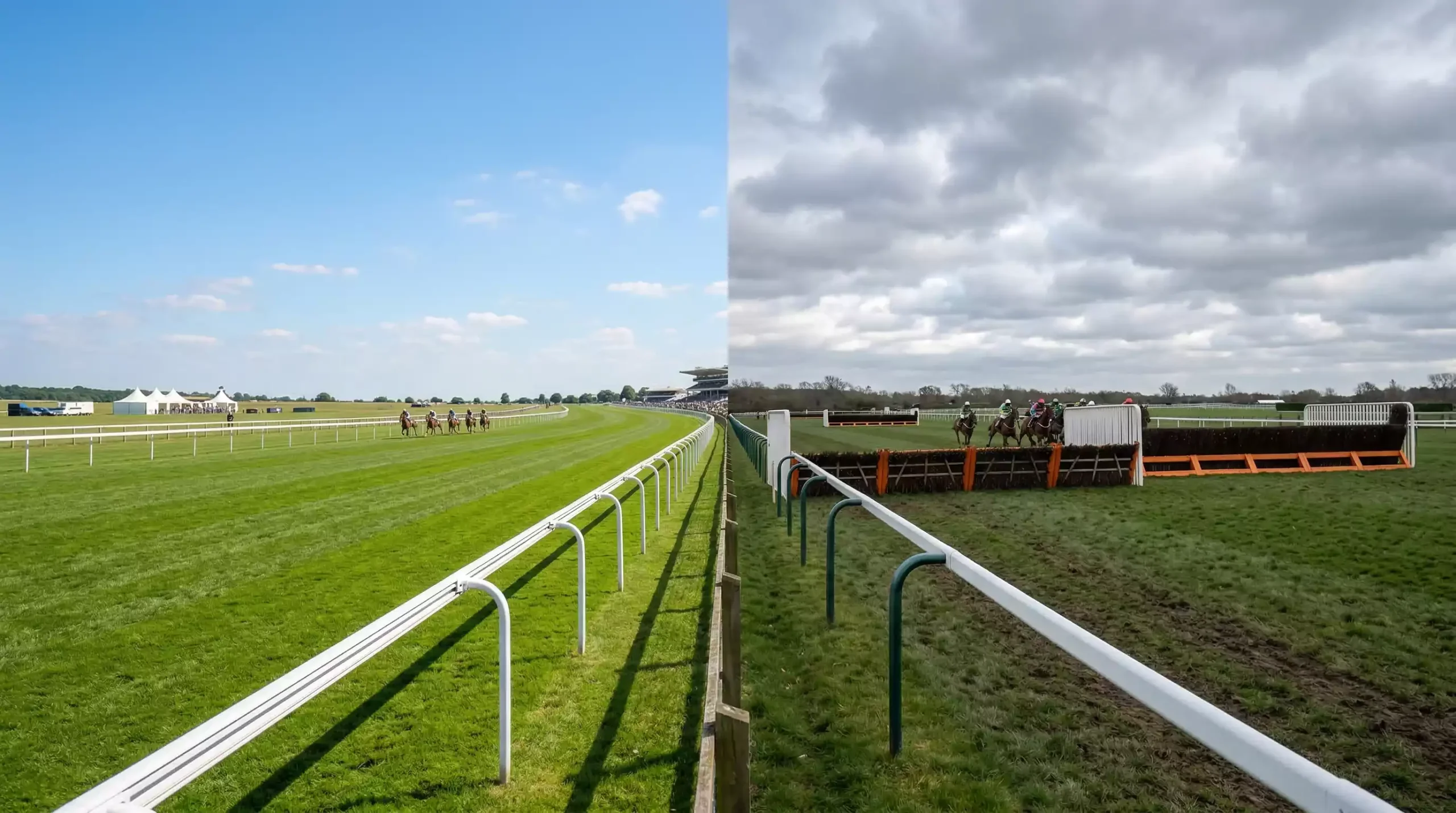
Flat races require runners to be declared approximately 48 hours before post time. Jump races operate on a 24-hour window. That split — two codes, two clocks — determines how early punters can see tomorrow’s confirmed field, how much time trainers have to assess conditions, and how long the gap is between declaration and race in which non-runners can emerge. Understanding why the two systems exist, and where the exceptions lie, is essential for anyone trying to plan bets across both codes. 48-Hour vs 24-Hour Declarations — More on this topic at non runners tomorrow.
This article explains the logic behind each declaration timeline, the historical and commercial reasons they differ, the exceptions for festivals and big handicaps, and what the difference means for punters checking non-runners.
The 48-Hour System for Flat Racing
The 48-hour declaration system for Flat racing was introduced in 2006. Before that, Flat declarations closed the day before the race, similar to the current Jump system. The switch to 48 hours was driven by commercial logic: a two-day lead time gives bookmakers, broadcasters and international betting markets a confirmed field well in advance, which supports structured wagering and media planning.
The commercial payoff was significant. According to a 2017 BHA report, international revenues from the sale of UK racing media rights grew from roughly six million pounds in 2006 — when the 48-hour system was introduced — to sixteen million pounds a year by 2017. The certainty of knowing the field two days out allowed overseas operators to build structured markets on UK racing, generating a revenue stream that had been impossible under the old day-before system.
The trade-off is a wider window for conditions to change between declaration and race. A horse declared for Saturday’s card on Thursday morning might face entirely different going by Saturday afternoon. Rain arriving on Friday evening can shift the ground by a full category, forcing the trainer to choose between running on unsuitable ground or withdrawing and creating a non-runner. This is why going-related withdrawals are proportionally higher on the Flat than on the Flat’s share of total racing might suggest — the 48-hour gap is long enough for meaningful weather events to intervene.
For punters, the 48-hour system means Flat race cards for tomorrow are available today. Declarations close at approximately 10am, two days before the race. By mid-morning, the field is published, the market opens, and your betting analysis can begin with a confirmed set of runners. The late changes — non-runners after declarations — still happen, but the framework is visible earlier than in Jump racing.
The 24-Hour System for Jump Racing
Jump racing retains the 24-hour declaration system, with runners confirmed the morning before raceday. The shorter window reflects the nature of National Hunt racing: winter ground conditions are volatile, and a two-day gap would produce even more going-related non-runners than the sport already generates. Trainers need to assess conditions as close to raceday as possible before committing a horse to run over obstacles on potentially treacherous footing.
The 24-hour system closes at approximately 10am the day before the race. Once declarations are in, the confirmed field is published and the process mirrors the Flat — bookmakers price the market, punters place bets, and any subsequent withdrawal creates a non-runner with standard Rule 4 and refund consequences.
The shorter lead time means Jump fields are confirmed later, which gives punters less time to prepare. A Flat card for Saturday is visible by Thursday; a Jump card for Saturday is not confirmed until Friday morning. For anyone who builds their bets over several days — studying form, assessing the going, modelling draw and pace — Jump racing compresses that preparation window into a single day, and it means non-runners emerge with less warning.
The 24-hour system also means that the going report available at declaration time is closer to the going that will prevail on raceday, reducing but not eliminating the gap between expected and actual conditions. Overnight rain between Friday declaration and Saturday racing can still trigger withdrawals, but the shift is typically smaller than the two-day window on the Flat allows.
Exceptions — Festivals, Big Handicaps and Supplementary Entries
Not every Jump race uses 24-hour declarations. Certain high-profile events — including races at the Cheltenham Festival, the Grand National meeting at Aintree, and selected Grade 3 handicaps — use 48-hour declarations to align with Flat protocols. The logic is that these races attract the largest ante-post markets and the most media attention, so the longer lead time serves the same commercial function as on the Flat: giving markets time to form and bettors time to analyse.
Supplementary entries add another layer. Some races allow trainers to add a horse to the field after the initial entry stage by paying a supplementary fee. These late additions can appear on the race card after punters have already begun their analysis, which is the mirror image of the non-runner problem — instead of a horse disappearing from the field, a new one appears. Supplementary entries are most common at the big festivals, where the prize money justifies the extra fee, and they can meaningfully alter the competitive picture.
For punters, the key is knowing which system applies to the specific race you are betting on. The Racing Post and Timeform both indicate the declaration deadline for each race. If you are betting on a Jump race that uses 48-hour declarations — a Cheltenham handicap, for example — your timeline for checking non-runners aligns with the Flat schedule rather than the standard Jump one. Misreading the deadline can leave you checking for non-runners a day too late.
What the Difference Means for Punters Checking NR
The practical consequence is timing. On the Flat, you can build your weekend bets by Thursday evening, safe in the knowledge that the declared field is largely stable. On Jump cards, your Friday morning is the crunch point — declarations close, the field is published, and your analysis starts. In both cases, late non-runners can emerge between declarations and post time, but the window is shorter for Jump racing and longer for the Flat.
The difference also affects how you manage going-related risk. On the Flat, with a 48-hour gap, a weather change after declarations is a real threat. Monitoring the forecast on the day between declaration and racing is essential. On Jump cards, the gap is shorter, so the going report at declaration time is a better proxy for raceday conditions — but it is still not immune to overnight changes, particularly during the volatile winter months. See also Field Size Trends in UK Racing.
The best approach is to align your checking habits with the declaration system. For Flat: check declarations when they close (two mornings before), then monitor the going and weather through the intervening day, and do a final non-runner check on the morning of racing. For Jump: check declarations when they close (morning before), then do a single final check on the morning of racing. Two systems, two routines, and the discipline of matching each one to the right code will keep you ahead of the non-runners that catch less organised punters off guard.
