
 Available in US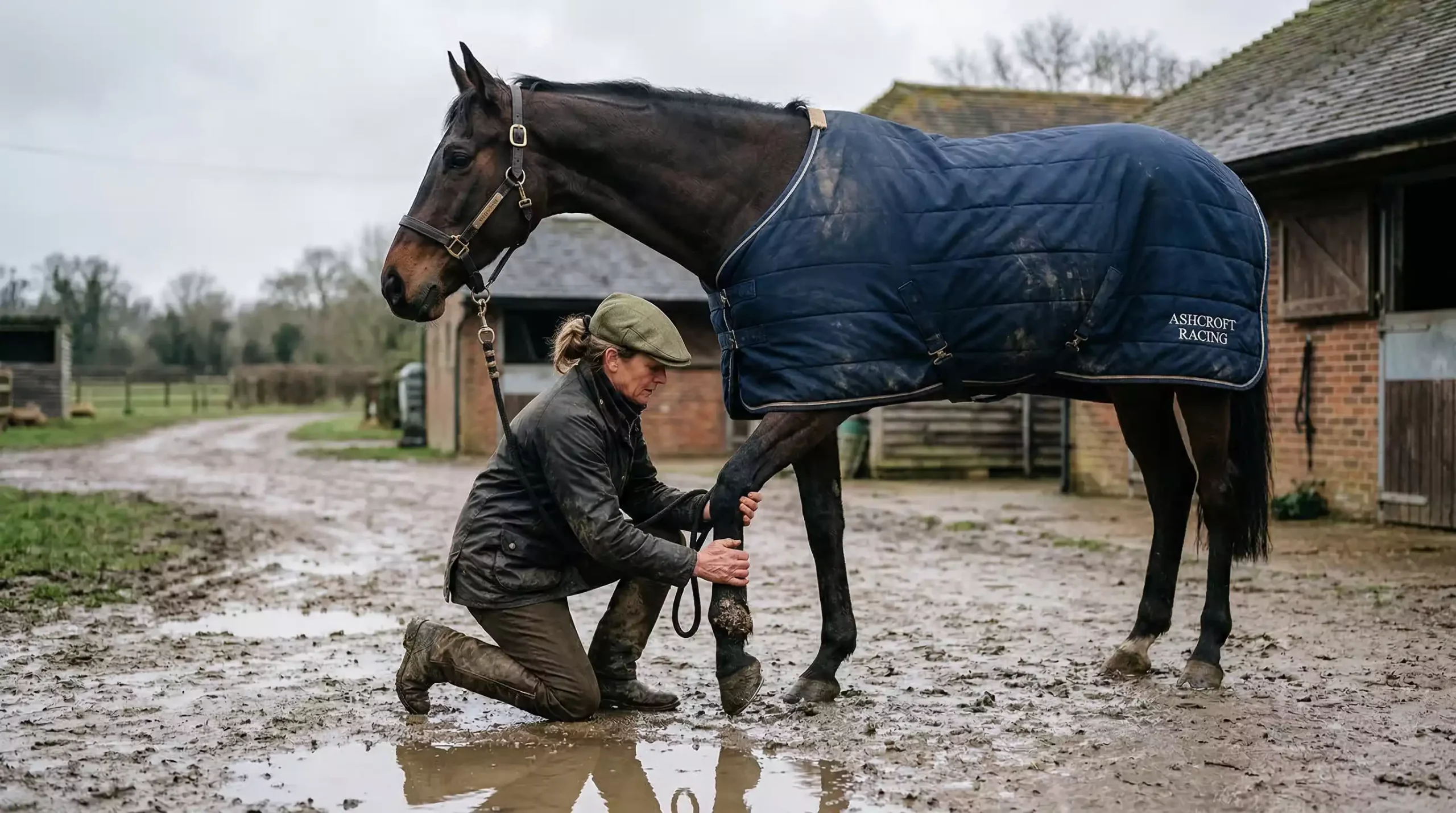
You checked the card, placed the bet, and went to sleep confident your horse would run. By morning, it is a non-runner. The stall is empty, the stake is void, and you are left wondering what happened between declaration and dawn. Horses are pulled from races for five core reasons, from ground that turns against them overnight to an injury spotted during morning exercise, and understanding those reasons turns a frustrating surprise into a predictable part of the sport. Why Horses Become Non Runners — More on this topic at non runners tomorrow.
Every scratch has a story. This guide breaks down the five main causes of non-runners in UK racing, explains the scale of each, and shows how they connect to the decisions trainers make under pressure from the BHA’s monitoring system.
Going Changes — When the Ground Doesn’t Suit
Ground conditions are the single largest driver of non-runners in British racing. According to BHA data, going accounts for approximately 35 per cent of all withdrawals — a figure that has remained remarkably stable over the years. When the ground shifts between declaration and raceday, trainers whose horses need specific conditions will pull them rather than risk injury or a pointless run.
The mechanism is straightforward. A trainer declares a horse on Tuesday for a Thursday Flat race. The going is reported as good to firm. On Wednesday evening, three hours of steady rain push the ground to soft. The horse in question has a pedigree and form record that screams fast ground — it has never won on anything softer than good. The trainer walks the course early Thursday morning, feels the give in the turf, and submits a going-related withdrawal. By 8am the horse is a non-runner.
As the BHA’s November 2024 Racing Report highlighted, the influence of conditions on non-runner rates can be dramatic. In the early months of 2024, 78 per cent of Jump fixtures were staged on soft or heavy ground, compared with a three-year average of 48 per cent. That kind of extreme skew drives withdrawal rates sharply upward, because a significant portion of the horse population simply is not suited to deep ground over obstacles. Richard Wayman, of BHA, described the conditions as “a reminder that the elements will continue to have a massive influence on when and where horses will run, especially over obstacles.”
For punters, going-related non-runners are the most predictable category. If you can see rain on the forecast and your selection is a confirmed ground-firm horse, the risk of withdrawal is real. Monitoring the going report the evening before and the morning of racing is the most effective single habit for anticipating non-runners.
Injury or Illness Detected by the Vet
The second major category covers horses that are withdrawn on medical grounds. A vet certificate is required when a horse is found to be lame, sick or otherwise unfit to race. This might be discovered during morning exercise — a slight irregularity in the horse’s stride that was not visible the day before — or during the pre-race veterinary inspection at the course itself. Taken together with self-certificates and going changes, these three withdrawal types account for nine out of every ten non-runners in BHA data, and vet certificates represent a substantial portion of that total.
Unlike self-certificates, vet certificates cannot be questioned as tactical moves. A qualified veterinarian has examined the horse and determined it should not race. The BHA imposes a mandatory stand-down period after a vet certificate withdrawal — typically two days — before the horse can be declared for another race. This prevents trainers from pulling a horse on medical grounds at one meeting and redirecting it to a different card the following afternoon.
From the punter’s perspective, vet-related non-runners are the hardest to predict. There is no weather forecast for a horse developing a cough overnight. The only signal available is the trainer’s recent withdrawal record and any stable reports published by racing journalists who have access to yard news. Some trainers are forthcoming about their horses’ wellbeing; others keep things close until the official withdrawal comes through.
Trainer Tactical Decisions
Not every non-runner is caused by bad ground or bad health. Sometimes the trainer simply changes their mind. The horse may have worked well in the morning, the going may be fine, but the trainer looks at the final field, sees a rival that was not expected to declare, and decides the race no longer suits their horse’s profile. Or the trainer has two runners entered elsewhere on the same day and, with only one available jockey, chooses to prioritise the stronger opportunity.
These tactical withdrawals are processed through self-certificates — the trainer’s own declaration that the horse will not run, submitted without a veterinary examination. Self-certificates are the most scrutinised category in the BHA’s monitoring framework precisely because they are the easiest to use and the most susceptible to abuse. A trainer who repeatedly self-certifies withdrawals risks crossing the threshold — 12 per cent of declarations on the Flat, 9 per cent over jumps — and losing the right to use self-certificates entirely for 12 months.
For the bettor, tactical non-runners are maddening because they carry no external signal. There is no weather change to watch, no injury report to follow. The decision lives in the trainer’s head until it becomes official. The only defence is awareness: if a trainer has a high non-runner rate in BHA’s quarterly data, the probability of a last-minute scratch is higher than average, and that should factor into how much confidence you place in any single declaration from that yard.
Transport and Logistics Failures
Horses travel to racecourses in specially fitted lorries, and the logistics of moving a half-tonne animal across the country are more fragile than most punters realise. A lorry breakdown on the motorway, an accident blocking the route, a horse that becomes distressed in transit and injures itself in the box — any of these can produce a non-runner even when the declaration was made in good faith and the going is perfect.
Transport-related withdrawals are relatively rare compared with going and medical causes, but they are the most abrupt. A going withdrawal is usually flagged by the morning of racing; a transport failure can happen two hours before the off with no prior warning. The trainer contacts BHA Racing Administration, the horse is declared a non-runner, and the market adjusts on short notice.
Trainers with yards located far from certain courses carry a slightly higher logistical risk. A Scottish-based trainer sending a horse to a southern track faces a longer journey with more potential disruption than a Lambourn yard sending a runner to Newbury. It is a marginal factor, but in a sport where marginal factors accumulate, it is one more variable worth noting when assessing the reliability of a declared runner.
Rare Reasons — Balloting Out, Safety and Administrative Errors
Outside the big four categories, a handful of less common causes round out the picture. Balloting is one: when a race has more declarations than available places, the BHA removes the lowest-weighted or lowest-rated entries by ballot. This is technically a withdrawal rather than a traditional non-runner, since the horse was declared but removed by the authority rather than the trainer, though the betting treatment is the same — stakes are returned.
Safety-related withdrawals have gained a new mechanism since May 2024. Under Rule (H)6, stewards can now declare a horse a non-runner at the start if the horse has been denied a fair start from the stalls or, since October 2025, at the tape for Jump races. A stall that jams, a horse that rears and becomes trapped — situations that previously left the horse technically a runner despite having no realistic chance — are now covered. The rule has been invoked roughly half a dozen times in its first year, but its existence closes a gap that frustrated punters and connections alike. See also Going Report Tomorrow.
Administrative errors are the rarest cause. A declaration filed with the wrong race, a paperwork discrepancy, a clerical mistake at BHA Racing Admin — these produce occasional non-runners but are vanishingly uncommon in an era of digital declaration systems. They are footnotes rather than factors in any serious betting analysis, but they do happen, and when they do, the horse is withdrawn without any fault of the trainer, the vet or the weather.
